
Skip to content Call Us: (913) 780-0011

A partial denture replaces several missing teeth when some of your own teeth remain. At Your Olathe Dentist, we often suggest a partial when you have gaps in more than one spot, or when a bridge or implant isn’t the right fit for you.

The best design depends on which teeth are missing, how strong your remaining teeth and gums are, and how you want the partial to look and feel. We’ll go over the choices with you and explain what to expect.

How a Partial Denture Stays in Place

A partial denture has replacement teeth set on a gum-colored base, held together by a framework that fits snugly around your natural teeth. Small clasps hook gently around nearby teeth to keep the partial from moving, and small rests let those teeth help carry the force of chewing.

Making a partial usually takes a few visits. We take impressions, record your bite, and may do a try-in so you can see how the new teeth look and fit before the final partial is finished.

At the try-in, we check the look, the fit around your own teeth, and how your bite comes together, and we make changes as needed. When your partial is ready, we adjust it again so it goes in smoothly and feels comfortable.
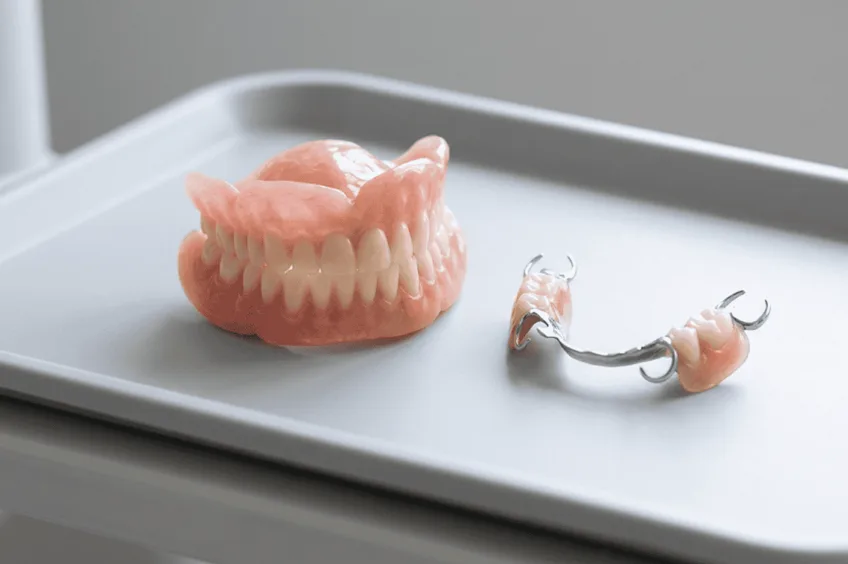
Full and partial dentures on a tray
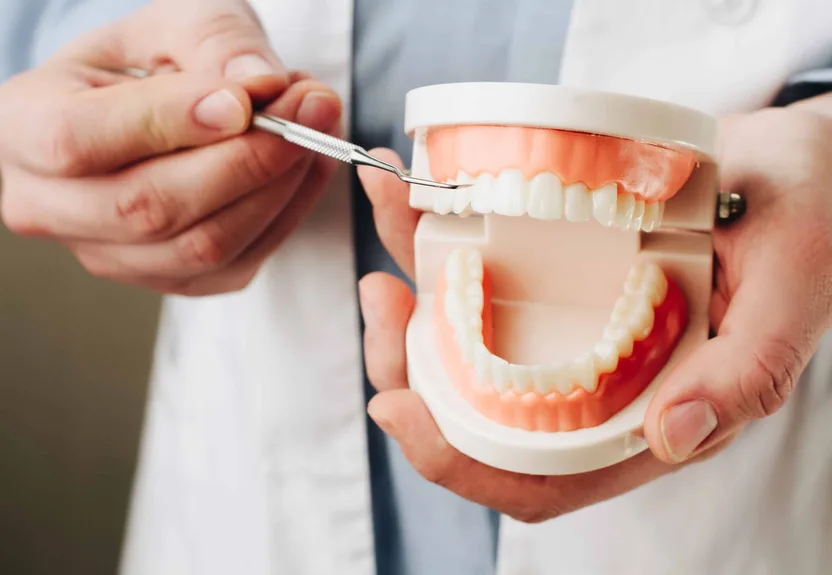
Dentist holding a model of teeth

Metal Clasps or a Metal-Free Partial?

Many partial dentures are built on a thin metal framework with metal clasps. This design is strong and stable, though a clasp near the front of your mouth may show when you smile.

Metal-free partials made from a flexible, tooth- and gum-colored material may be an option for some patients. They can blend in more naturally, but they aren’t right for every mouth. Read more on our metal-free dentistry page, or compare partials with full dentures in our full vs. partial dentures guide.

Dr. Tony will look at your remaining teeth, your bite, and your goals, then recommend the type of partial that makes the most sense for you.

Is a Partial Denture Right for You?

A partial can be a good choice if you’re missing several teeth in the same jaw but still have healthy teeth that can help hold it. It’s also a practical way to replace teeth without surgery.

The teeth that support a partial need to be in good shape. Any cavities or gum disease should be treated first, so the partial has a solid, healthy base to rest on.

If you’re missing just one or two teeth in a row, a fixed bridge or a dental implant may be worth comparing. We’ll explain the trade-offs of each option, including comfort, care, and cost, so you can make the choice that fits you.

Putting In and Wearing Your Partial

Your partial should slide into place with gentle pressure from your fingers. Never bite it down into place, since that can bend the clasps or crack the base. We’ll show you how to put it in and take it out before you leave.

Like any new appliance, it takes a little time to feel normal. Your speech may sound slightly different for a few days, and reading aloud can help. Start with softer foods cut into small pieces, and chew on both sides to keep things balanced.

Some sore spots are common at first. If an area keeps rubbing or a clasp feels too tight, call our office for an adjustment. Please don’t bend the clasps or file the partial yourself, as that can change the fit or break it.

Wearing your partial for a few hours before an adjustment visit can help us spot exactly where it is pressing. We’ll let you know if that would help.

Caring for Your Partial and Your Natural Teeth

A partial denture needs daily cleaning, and so do the natural teeth that hold it. Plaque and food can build up under the clasps and along the edges of the partial, which raises the risk of cavities and gum problems in those supporting teeth.

Take your partial out to clean it each day, using a soft brush and a cleaner made for dentures. Regular toothpaste can be too rough and may leave scratches. When it’s out of your mouth, keep it moist as we recommend so it holds its shape.

Brush and floss your own teeth carefully, paying extra attention to the teeth the clasps rest on. Those teeth are doing extra work, so keeping them healthy helps your partial keep fitting well.

Regular checkups and cleanings let us check the fit of your partial and the health of your gums and remaining teeth.

Adjustments, Repairs, and Changes Over Time

Over time, clasps can loosen and your gums can change shape, so a partial that once fit well may start to move or rub.

Often a quick adjustment or a reline can bring back a snug fit. If a clasp breaks or a tooth comes off the partial, bring it in rather than gluing it at home, since household glues aren’t safe for use in the mouth.

If you lose another natural tooth later on, some partials can be changed to add a replacement tooth, depending on how they were designed. In other cases, a new partial may work better. We’ll look at your situation and explain your options.

If your partial no longer feels secure or comfortable, give us a call and we can help you decide on the next step.

Find the Right Partial Denture for You

Whether you’re replacing a few missing teeth for the first time or your current partial no longer fits like it used to, Your Olathe Dentist is here to help you explore your options.