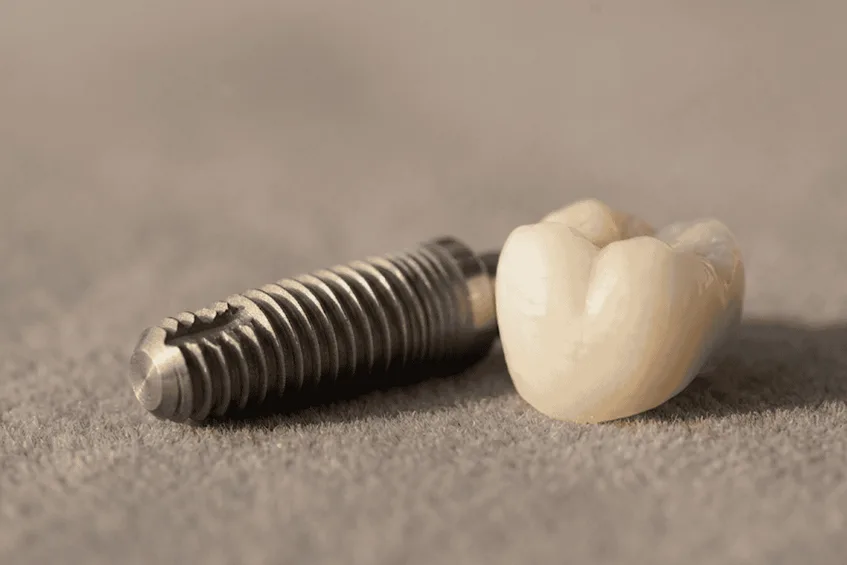
A dental implant takes the place of a missing tooth root. It is a small post, usually titanium, set into the jawbone. Over the following months the bone grows snugly around it, giving the new tooth a firm base. A crown is then attached on top so the tooth looks and works like the rest of your smile.
At Your Olathe Dentist, Dr. Tony Raper has completed advanced training in dental implants. Implants may be a good fit for replacing one tooth, several teeth, or helping hold a denture steady. What we recommend depends on your oral health, your jawbone, and the kind of replacement that suits you best.
How Are Implants Different?
Bridges and removable dentures also replace missing teeth, but each one is held in place a different way.
A traditional bridge is anchored to the teeth on either side of the gap, and those teeth usually have to be reshaped to support it. A removable denture sits on the gums and can shift a bit when you chew or talk. An implant is rooted in the jawbone itself, so it supports the new tooth on its own without borrowing strength from the neighbors.
Implants can also help protect the bone where a tooth is missing. A natural root passes chewing pressure into the jaw, which keeps the bone active, and an implant can do much the same. Some bone change can still happen, but an implant may help slow bone loss in that spot.

What Implant Treatment Looks Like
Implant treatment happens in stages, with time to heal in between. For many people the whole process takes several months. Your own timeline depends on your bone and gums, whether any extra steps are needed, and how quickly you heal.
1. Exam and Planning
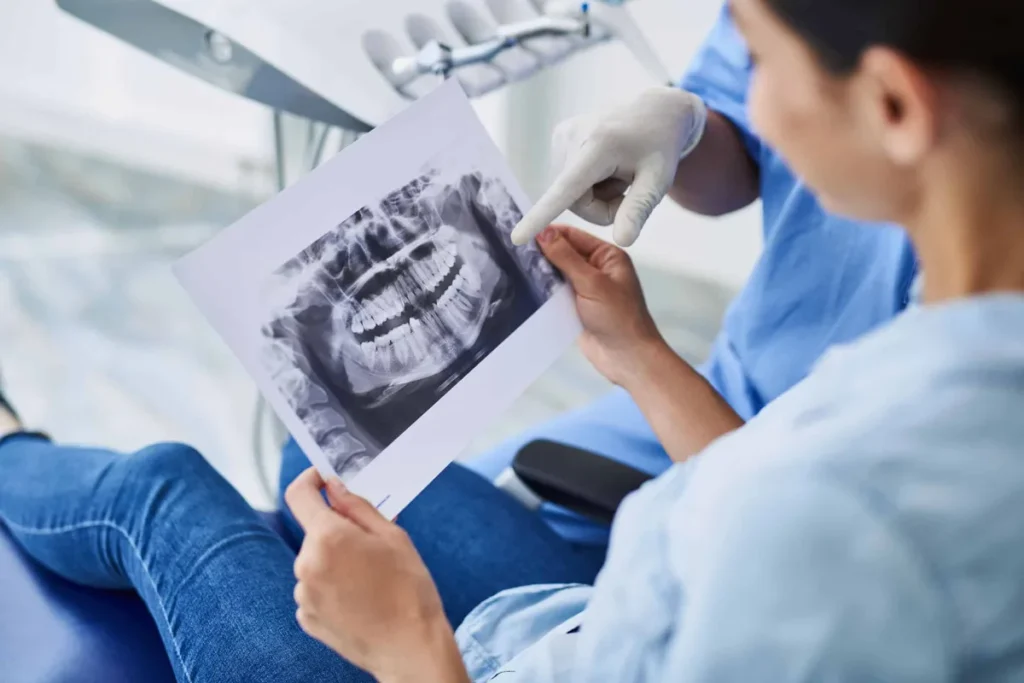
We start with a careful exam and a look at your dental and medical history. Digital X-rays help us check the bone, see the nearby teeth and structures, and plan where the implant should go.
We’ll talk about the missing tooth, what you hope to get from treatment, and the options available to you. This visit tells us whether an implant makes sense and whether anything else needs to happen first. We’ll explain each step and coordinate any specialist care if it’s needed.
2. Getting the Area Ready
Some people already have enough healthy bone to hold an implant. Others need a bone graft first to rebuild the area.
A graft is often suggested when the jaw has thinned after a tooth was pulled or has been gone for a long time. If you need one, you’ll usually have some extra healing time before moving on.
3. Placing the Implant and Healing
The implant is placed in the jawbone during a minor surgical procedure. As you heal, the bone slowly fuses to the implant, a process called osseointegration. That bond is what lets the implant carry a new tooth.
Healing time is different for everyone. We’ll let you know what to expect based on your own treatment plan.
4. Adding the New Tooth
When the implant is ready, a small connector called an abutment may be attached. We then take an impression so your crown or other restoration can be made to fit.
The finished tooth is placed and adjusted so your bite feels natural and comfortable. We’ll show you how to care for it and keep the gums around it healthy.

Using Implants to Replace Several Teeth
Missing more than one tooth does not always mean you need an implant for each one. In many cases, a few implants can support a bridge that fills a larger gap.
Implants can also help replace most or all of the teeth in the upper or lower jaw. Depending on your plan, they may hold a fixed bridge or help anchor a removable denture.
If your denture slips or shifts, an implant-retained denture may feel much steadier when you eat and talk. Whether it’s right for you depends on your bone, your overall oral health, and the type of denture you have.
How many implants you need, and what kind of restoration we suggest, will come down to your own situation.
You can read more about your options on our dentures page.
Who Is a Good Candidate for Implants?
Many adults who are missing teeth can be candidates for implants, but an exam is the only way to know for sure.
A few things affect whether implant treatment is a good fit:
Bone health: You need enough bone to hold the implant, or you need to be a good candidate for a bone graft.
Healthy gums: Any active gum disease should be treated before an implant is placed.
Overall health: Some health conditions and medications can slow healing, so we’ll go over them with you.
Smoking: Smoking raises the chance of problems and can slow healing.
Home care: Keeping the implant and the gums around it clean matters for the long run.
Having a condition like diabetes doesn’t rule out implants on its own, but diabetes that isn’t well controlled can get in the way of healing. Dr. Tony will review your health history and talk with you about anything that could affect treatment.
If an implant isn’t the right choice, there are other good ways to replace missing teeth. Our goal is to find the option that fits your health and your life.
Taking Care of Your Implant
An implant can’t get a cavity, but the gums and bone around it still need care. Bacteria can inflame the tissue around an implant, and if that goes on long enough it can damage the bone holding it.
To help protect your implant:
Brush twice a day and take extra care around the implant.
Clean between your teeth and around the new tooth every day, using the method our team shows you.
Keep your regular checkups and professional cleanings.
Call us if you notice bleeding, swelling, soreness, or any movement around the implant or crown.
Regular visits let us keep an eye on the implant, the tissue around it, and the replacement tooth. With good care, implants can last many years, though how long yours lasts depends on a number of personal factors.
Schedule a Dental Implant Consultation in Olathe
If you’re missing a tooth or your denture never feels quite secure, a consultation is a great first step. Dr. Tony will look at your situation, walk through your options, and explain what each one involves before you decide anything.
Ready to Schedule Your First Visit?
New patients are always welcome at Your Olathe Dentist on S Lone Elm Rd. If you have questions about your first visit, insurance, or our $49 new patient exam and X-rays, give our team a call.
Request an appointment
Send this and the front desk will follow up to confirm a time and check your insurance before you arrive.