
A porcelain bridge replaces one or more missing teeth by joining a natural-looking replacement tooth to the teeth on each side of the gap. Unlike a removable partial denture, a traditional bridge is cemented in place, so there is nothing to take out at night.
At Your Olathe Dentist, we’ll help you figure out whether a bridge, a dental implant, or a partial denture is the best way to replace your missing tooth. The right choice depends on the health of the nearby teeth, your overall oral health, and what you want from treatment.
Why Replace a Missing Tooth?
A missing tooth doesn't always hurt, especially if it's near the back where no one sees it. But an open space can slowly affect your bite and the teeth around it.
Over time, the teeth next to the gap may lean into the empty space, and the tooth above or below it may drift out of place. This doesn't happen to everyone, but when it does, it can change how your teeth meet and create spots that are harder to keep clean.
The bone where the tooth used to be can also shrink over time, since it no longer gets pressure from a tooth root. That can limit your options later, including whether a bone graft is needed before an implant.
Replacing the tooth can help you chew comfortably and keep your bite balanced. Dr. Tony can look at the area and let you know whether replacing it is a good idea.
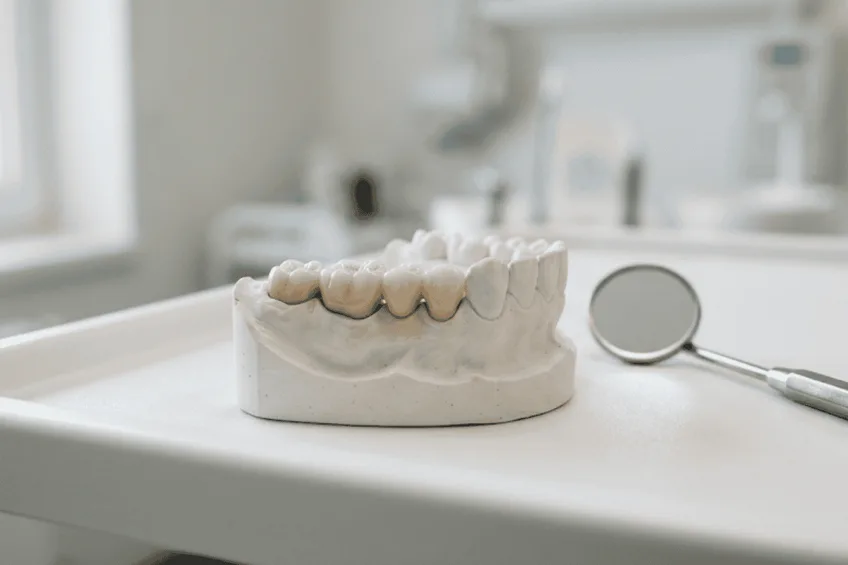

How a Porcelain Bridge Works
A traditional bridge leans on the teeth on either side of the gap for support. Those teeth, called abutments, are prepared for crowns, and the crowns are joined to a replacement tooth called a pontic.
The whole bridge is made as one piece and cemented in place. Once it’s in, it works as a fixed replacement for the missing tooth, and porcelain can be shaded to match your natural teeth.
The supporting teeth have to be healthy and strong enough to carry the extra load. Dr. Tony will check those teeth, the size of the space, and your bite to see whether a traditional bridge is a good fit.
Bridge vs. Implant vs. Partial Denture
There is more than one way to replace a missing tooth, and each option has its own pros and cons.
Dental Bridge
A bridge can be a great choice when the teeth next to the gap already need crowns, or when an implant isn’t a good option. It stays fixed in place and doesn’t involve implant surgery.
The trade-off is that the supporting teeth usually have to be reshaped to hold the bridge, even if they were healthy before.
Dental Implant
An implant replaces the root of the missing tooth and holds a crown on its own, without relying on the teeth nearby. It may help preserve the bone in that area, but it involves surgery and a healing period that can last several months. Some people also need extra steps, like a bone graft.
An implant is often worth a look when the neighboring teeth are healthy, but whether it’s the best fit depends on your situation.
Read more on our dental implants page.
Removable Partial Denture
A partial denture replaces one or more missing teeth with an appliance you can take out. It usually doesn’t require reshaping the nearby teeth the way a bridge does, and it may cost less up front.
On the other hand, you’ll take it out to clean it, and it can feel different from a fixed tooth when you eat or talk.
Visit our partial dentures page to learn more.
There isn’t one right answer for everyone. We’ll walk you through the options for your gap, including the benefits, the limits, and the costs, before you make a choice.
What to Expect When You Get a Bridge
A traditional bridge usually takes two visits, since it is custom made by a dental lab.
First Visit
We numb the supporting teeth and shape them for their crowns. Then we take impressions and choose a porcelain shade that blends with your natural teeth.
We may place a temporary bridge to protect the prepared teeth while your permanent bridge is being made.
Second Visit
When your bridge is ready, Dr. Tony checks how it fits, how the replacement tooth rests against the gum, the color, and how your bite comes together.
Any small adjustments are made before the bridge is cemented in place. Our team will also show you how to clean under the replacement tooth and care for the teeth that hold it.
How to Clean and Care for Your Porcelain Bridge
Cleaning under a bridge matters a lot, because food and plaque can collect around the replacement tooth and along the gumline.
Since a bridge is made as one connected piece, you can’t floss between the joined teeth the usual way. A floss threader, special bridge floss, or a small interdental brush can help you clean under the replacement tooth.
Our hygienists can show you the easiest way to clean your own bridge.
Good daily care helps protect your gums and the supporting teeth from decay and swelling. Keep brushing twice a day, cleaning under the bridge as we’ve shown you, and coming in for regular checkups. Call us if the bridge feels loose, becomes uncomfortable, or the gums around it get puffy or bleed.
How long a bridge lasts depends on several things, including the health of the supporting teeth, your bite, the materials used, and how well the area is cared for.
Talk About Replacing Your Tooth in Olathe
If you’re missing a tooth, you don’t need to have your mind made up before you come in. Your Olathe Dentist can examine the area, explain your options, and help you weigh a bridge, an implant, and a partial denture side by side.