
Professional teeth whitening uses stronger whitening gels than you will find on a store shelf, applied in a way that fits your teeth and is supervised by your dentist. At Your Olathe Dentist in Olathe, whitening starts with a quick check that there is nothing underneath that needs treating first.
Why Teeth Lose Their Brightness
There are two kinds of discoloration, and they respond to whitening differently.
Surface stains come from what passes over your teeth: coffee, tea, red wine, dark sodas, and tobacco. They sit on the outside of the enamel and usually respond well to whitening, and some of that staining comes off at a regular cleaning.
Deeper discoloration is another story. Enamel thins with age, letting the naturally yellow layer underneath show through. Some medications taken during childhood can tint teeth from the inside, and a tooth that was injured or had a root canal can darken on its own. Whitening helps with some of these and not much with others, which is where bonding or a crown may come in.
Dr. Tony will tell you which kind you have before you spend anything, because it changes what you can realistically expect.
Professional vs. Store-Bought
Over-the-counter strips, gels, and whitening toothpastes use milder ingredients and one-size-fits-all application. They can help a little with surface stains, but results are often slow, uneven, or hard to predict.
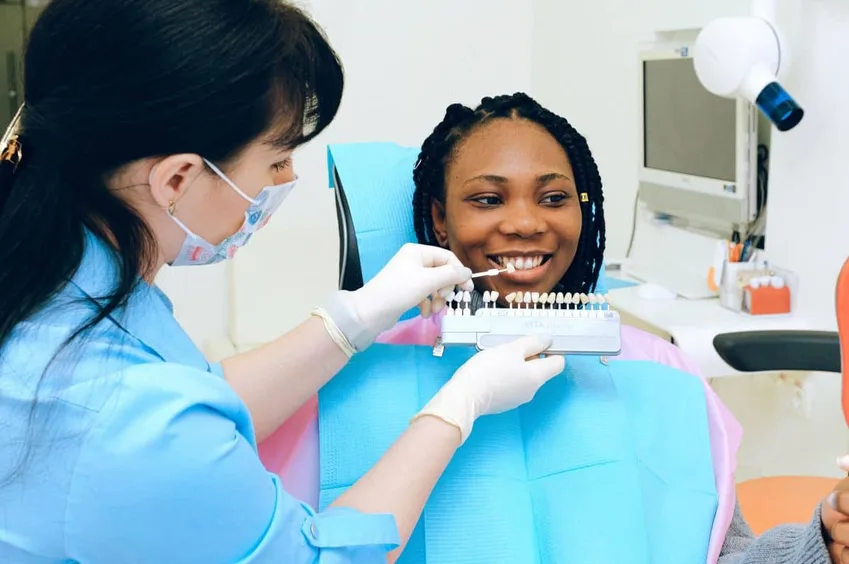
Professional whitening uses stronger gels with a better fit, so the whitening agent stays on your teeth and off your gums. Just as important, your dentist checks your mouth first and guides the process, so you can adjust along the way if your teeth get sensitive. Dr. Tony will recommend the whitening option that fits your teeth and your schedule.
What It Will Not Do
Whitening works only on natural tooth structure. Crowns, bridges, and tooth-colored fillings do not change color, so a crown on a front tooth will stay the same shade while the teeth around it get lighter. In that case, the usual plan is to whiten first, let the new shade settle, then replace the restoration to match.
Whitening also does not fix chips, gaps, or crowding. Those may call for bonding or crowns or Invisalign.
Sensitivity
Some sensitivity during whitening is common, and it usually fades within a day or two of finishing. Most people describe it as a brief, sharp twinge with cold rather than a constant ache.
If it is bothering you, do not just push through. Taking a break, cutting back on how long you whiten, or using a toothpaste for sensitive teeth can help. Let us know and we will adjust the plan. Sensitivity that lingers after whitening is worth having checked, because it can point to something else.
Making It Last
With good habits and the occasional touch-up, whitening results can last a long time, and what you drink matters more than most people think. The first day or two after whitening is when teeth pick up stains most easily, so it helps to avoid coffee, tea, red wine, and other dark foods and drinks during that window.
After that, sipping dark drinks through a straw helps, rinsing with water afterward helps, and keeping up with regular cleanings removes surface stains before they set in. Ask us about touch-ups, since a little upkeep now and then is much easier than starting over.
Before You Whiten
Whitening gel on an untreated cavity or exposed root can be very uncomfortable, and whitening over gum disease skips the real problem. That is why your first step is a quick exam, not a sales pitch.
Call (913) 780-0011 or use the contact form.
Book a Whitening Consultation
We will check your shade, look for anything that needs care first, and go over your options and cost.